




Casablanca Airport: Your Complete Guide to Mohammed V International Airport
Casablanca Airport Guide: Everything You Need to Know About Mohammed V International Airport
When you disembark at Casablanca Airport, you’re entering Morocco’s biggest air hub. I have been writing about airports for three decades, and Mohammed V International ranks as one of Africa’s best-run facilities. This airport, nestled in the suburb of Nouasseur some 30 kilometers southeast of downtown Casablanca, processes anything fr om backpackers to corporate hot shots with enviable smoothness.
The national carrier Royal Air Maroc is based at Casablanca Airport. The facility ranks among Africa’s five busiest airports, and for good reason. With three passenger terminals and connections to over 96 destinations worldwide, roughly 50 airlines operate regular flights through this Moroccan gateway.
Understanding Casablanca Airport’s Layout
Each of the airport’s three terminals has a specific function. Terminal 1, the youngest one, welcomes visitors with modern design and an annual capacity of 14 million PAX. However, when you get here, the train station is conveniently down in the basement level, so stepping off your Western Railway service, it’s a convenient onward journey too.
T2 (the international terminal) works like a trooper with no fuss, and it’s effortlessly easy to flow through passengers. I’ve watched thousands of travelers navigate through these halls over the years, and the design simply works.
Terminal 3 is mainly for freight, in response to the airport’s high cargo capacity of 150,000 tons annually. This special cargo handling service is enabling Morocco to keep its status as a regional trading site.


Getting To and From Casablanca Airport
During my years of writing about air travel around the world, I’ve understood that ground transportation can make or break a travel experience. Casablanca Airport has a few good ones.
The fastest way between the airport and downtown is offered by a train service run by ONCF. Trains leave the station on Terminal 1’s lower level every hour. This is both more time and cost-efficient than using taxis.
Casablanca Airport’s terminal is connected to the city by buses, which represent a cheap transfer alternative for those on a budget. A taxi from the station to central Casablanca is about US 30 dollars (or 280 Moroccan dirhams). I suggest that you always negotiate the fee before driving off to ensure there are no miscommunications.
Rental car counters are conveniently located within the terminal facilities. All of the main global chains are here, as well as local Moroccan companies that can often be competitive.
Casablanca Airport by the Numbers
The numbers are poetic. Casablanca Airport represented 33 per cent of all flights in and out of Morocco in 2024. Only between January and May this year, over 3.9 million passengers used these terminals.
There are 16 boarding gates scattered between the two terminals in the airport, which allows both arrivals and departures to be handled with great efficiency. At its busiest, the airport saw 10 million passengers a year (in what was then an annual record for traffic).
It is a section of Casablanca’s existing Anfa Airport, and it is operated by ONDA (National Airports Office). It’s also the busiest airport in Morocco; boarding and deboarding take place via jet bridges. It is the second busiest airport in Africa based on scheduled passengers.s Behind O. R. Tambo International Airport, Cairo International Airport, and Cape Town International Airport are also busier airports than it. This repositions Morocco as being ever more at the heart of African and global aviation (Image: Master Meda). This demonstrates the increasing importance of Morocco bothin African and World Aviation.
Top Destinations from Casablanca Airport
According to 2025 flight schedules and passenger demands, Paris is ranked first as a destination for both of its airports, Orly and Charles de Gaulle. The most significant direct link towards Casablanca Airport originates from the French capital – demonstrating both historic relations as well as a well-connected business.
Marrakech is the third most popular destination, with regular domestic flights between Morocco’s two biggest cities. Madrid captures a major portion of traffic as Spain’s premier gateway, with Agadir being used for travelers navigating to Morocco’s southern Atlantic coast.
Istanbul serves as the gateway to Asia and the Middle East. Dubai links passengers to the Gulf region and beyond, while Cairo is its North African hub. Tunis keeps the flow of passengers between the Maghreb, while Dakar connects West Africa with the network through Casablanca Airport.


What Travelers Say About Casablanca Airport
Three decades of reviewing airports have taught me that passenger feedback always cuts through to the truth about a facility. Casablanca Airport reviews tend to compliment Terminal 1 amenities for being modern and fast immigration service. The quality of cleanliness hardly differs from that of major European airports.
Some travelers say that the signs could be more helpful, especially for first-time visitors moving between terminals. Duty-free shopping is average, good though not great prices, and a less comprehensive mix than Dubai or Singapore.
Food choices in Casablanca Airport include fast food via cafes to full-service a la carte dining of Moroccan and international dishes. Yes, prices are higher than in the city centre, as you’d expect at any major airport, but generally quality meets expectations.
Discovering Casablanca Beyond the Airport
It’s a place you’d want to spend several days in, Casablanca itself. As the largest city and economic hub of Morocco, it has a prime spot on the Atlantic coast, home to the nation’s most significant port. Its architecture, which weaves Berber, Portuguese, and French colonial elements, tells the story of its history.
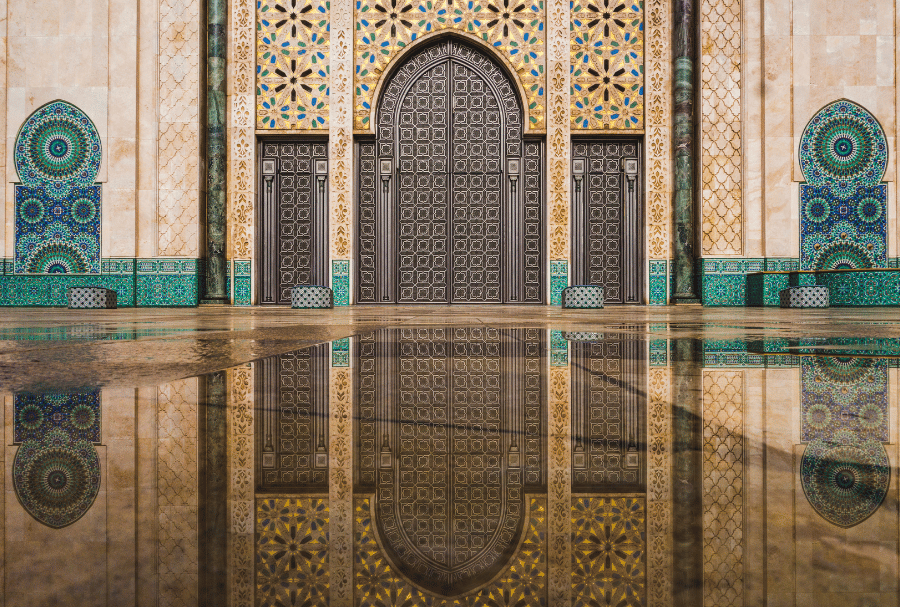
A 210-m minaret towers over the Atlantic and is one of the most recognizable silhouettes in the city, dominating the vista. This architectural masterpiece, constructed in 1993, is one of the largest mosques in the world. To non-muslims ofcourse they can, but via tours which pass through marveling at the detailed mosaics, marble floors,s and outstanding craftsmanship.
At the city’s administrative and cultural center is Mohammed V Square, where attractive colonial-era buildings exhibit a mix of Art Deco style with Moorish detailing. Mighty boulevards and grand squares that rub shoulders with teeming markets and ancient medinas.
The Habous Quarter or New Medina offers some of the most splendid examples of traditional Moroccan architecture. On these narrow streets are artisan storefronts of centuries-old craftsmen. The room vibrates with actual local excitement.
The central market, Marche Central, is a bustling market ABOUT TOWN where the pace of daily life moves to its own colour and sound. Fresh seafood is brought up from the Atlantic, while vendors pile up pyramids of local produce. This is my sensory version of rich, sensual Casablanca, far more than any museum.
Nightlife is cosmopolitan, with chic cafes and popular restaurants. Modeled after the establishment in the classic film, Rick’s Café is a place to feel and see as tourists and locals come knocking. The food offers excellent Moroccan dishes—particularly tagine, couscous, and fresh seafood from the nearby Atlantic that competes with any coastal city.
Lovely Atlantic beaches unroll towards the coast beyond the city. Nearby, you can visit the historical towns of El Jadida and Rabat. From wandering the streets of architectural masterpieces to tasting food specialties or tranquil hours by the sea, there is something for everyone in Casablanca.
Practical Tips for Casablanca Airport
After covering airports for thirty years, I’ve developed a list of practical advice that serves travelers well. Arrive three hours before international departures from Casablanca Airport. Security lines move most of the time, but peak periods can slow processing.
Book flights and lodging early – to get the best deals, book well in advance, as during tourist peaks, prices skyrocket. For smaller purchases, the Moroccan dirham (dh) is more convenient than euros or dollars; however, major vendors accept cards.
Well in advance, check visa requirements. Morocco operates different entry rules depending on your nationality. For instance, Americans can visit visa-free for 90 days, whereas other nationalities have different restrictions.
You may want to buy some travel insurance that includes coverage for flight delays and lost luggage. Casa baggage is pretty good, But ANY hub connection is risky.
If you can, try to get your boarding pass before getting to Casablanca Airport. Red passes literally save you hours throughout the day. Be sure to also have a paper backup, should there be any technical trouble.
Avoid exchanging currency with unauthorised dealers; use official counters inside the terminal. The rates are more reliable, and you risk less of a scam.
Planning Your Journey Through Casablanca Airport
Its location also makes it a perfect gateway to explore Morocco. From here, Marrakech and the Atlas Mountains are easily drivable to the north, while you head south into the Sahara Desert for day tours or take longer overland routes on other days along the coasts of both the Atlantic Ocean and the Mediterranean Sea.
The national carrier Royal Air Maroc offers domestic flights to most of the main cities within Morocco from Casablanca Airport. There are also sub-market carriers on these routes.
For those travelling from abroad, Casablanca provides easy access to Europe with several flights daily to Paris, Madrid, and London, etc. It may be possible to make connections in the Middle East via Dubai and Istanbul into the Asian network. From Morocco, African routes connect it to the whole continent.
The airport’s facilities continue to evolve. Recent expansions increased capacity and improved passenger flow. Future development plans promise additional gates and enhanced amenities.
Why Casablanca Airport Matters to Africa
As the 4th busiest airport on the continent, Casa is a key player in African aviation. The facility is a lesson on what African airports can be with the right investment and management. New terminals, good operational practices, and excellent interconnections are evidence that African aviation infrastructure can be world-class.
And the position of Morocco as a gateway makes it a transfer point between Europe and Sub-Saharan Africa. All of this, along with Morocco’s political and economic stability, suggests that the airport’s future could be bright.
The various successes of the airport are a driving force for Morocco’s tourism, which is an essential element in the economic life of the country. Millions of tourists arrive each year through Casablanca Airport, taking with them experiences and memories that influence the perception of Morocco abroad.
Final Thoughts on Casablanca Airport
Over three decades of reporting on aviation, I have watched airports come into and fall out of importance. The Casablanca Airport is gaining increasing popularity with significant investment cum professional management, and Morocco is playing an increasingly strong part in world trade and tourism.
Whether you are traveling to Morocco’s commercial center, interchanging to explore the rest of this intriguing country, or further afield, Casablanca Airport provides all the facilities and services that a visitor needs for a smooth journey. With state-of-the-art terminals, a variety of transportation choices, and links to almost 100 destinations worldwide, you will understand why this Moroccan hub is rising through the ranks as one of Africa’s best shaped and most improved airports.
The city of Casablanca itself is worth a visit, particularly if you have the visa that allows you to leave the airport. From its dramatic Hassan II Mosque to a bustling market, from Art Deco buildings to beaches along the Atlantic, this economic hub is where you can find just about anything that’ll enrich your Moroccan experience. When you land at Casablanca Airport, it’s more than simply passing through a travel hub — you’ve landed in a city and a country that has become adept at balancing tradition with modernity, and producing something wholly Moroccan.
Frequently Asked Questions (FAQ) About Casablanca Airport
How far is Casablanca airport from central Casablanca?
The airport is about 30 km(19 miles) southeast of the city centre, a journey that should take between 45 and 60 minutes to reach any of central Adelaide, so it’s better to have your passport. Downtown, depending on traffic and your mode of transport.
Is there a train from Casablanca airport to the city?
Yes. Casablanca Airport is linked to the city by the ONCF train. The lower level of Terminal 1 is home to the train station, and service runs about every hour. This is one of the quickest and cheapest ways to get from central Casablanca.
How much does a taxi cost from Casablanca Airport to downtown Casablanca?
A taxi from Casablanca Airport to the city center typically costs between 250 and 300 Moroccan dirhams (approximately USD 25–30). It is strongly recommended to agree on the fare before starting the journey, especially during late hours.
How early should I arrive at Mohammed V International Airport?
For international flights, passengers should arrive at Casablanca Airport at least 3 hours before departure. For domestic flights, arriving 2 hours in advance is generally sufficient.
Which terminal handles international flights at Casablanca Airport?
Most international flights operate from Terminal 2, while Terminal 1 also handles a mix of international and domestic flights. Terminal 3 is primarily dedicated to cargo operations.
Is Casablanca Airport suitable for long layovers?
Yes. Casablanca Airport offers a reasonable range of facilities for long layovers, including airport lounges, restaurants, cafés, and free Wi-Fi. If you have a long transit and a valid visa, leaving the airport to explore Casablanca is a good option.
Are there any car rentals at Casablanca airport?
Yes. Hand in hand with this, car rentals, both for international and domestic companies, are also available within the terminal building, which makes connections extremely friendly, especially if you intend to explore Casablanca or other parts of Morocco on your own.
What are the most popular destinations from Casablanca Airport?
Popular destinations from Casablanca Airport include Paris (Charles de Gaulle and Orly), Madrid, Marrakech, Dubai, Istanbul, Cairo, and Dakar. The airport serves as a major hub connecting Europe, Africa, and the Middle East.
How safe and clean is Casablanca Airport?
Casablanca Airport is a very safe and clean airport that serves the region well. Security and immigration are quick, particularly in the newer terminals.
Can I get currency at Casablanca Airport?
Yes. Currency exchange facilities exist in the terminals. Travel with these authorised services, instead of to the unofficial money changers who may quote you unfair rates in their scams.
Is there free Wi-Fi at Casablanca Airport?
Yes. Wi-Fi throughout Casablanca Airport is free. The connection quality is usually decent in the passenger zone, lounges, and departure halls.


